 OPSL
OPSL
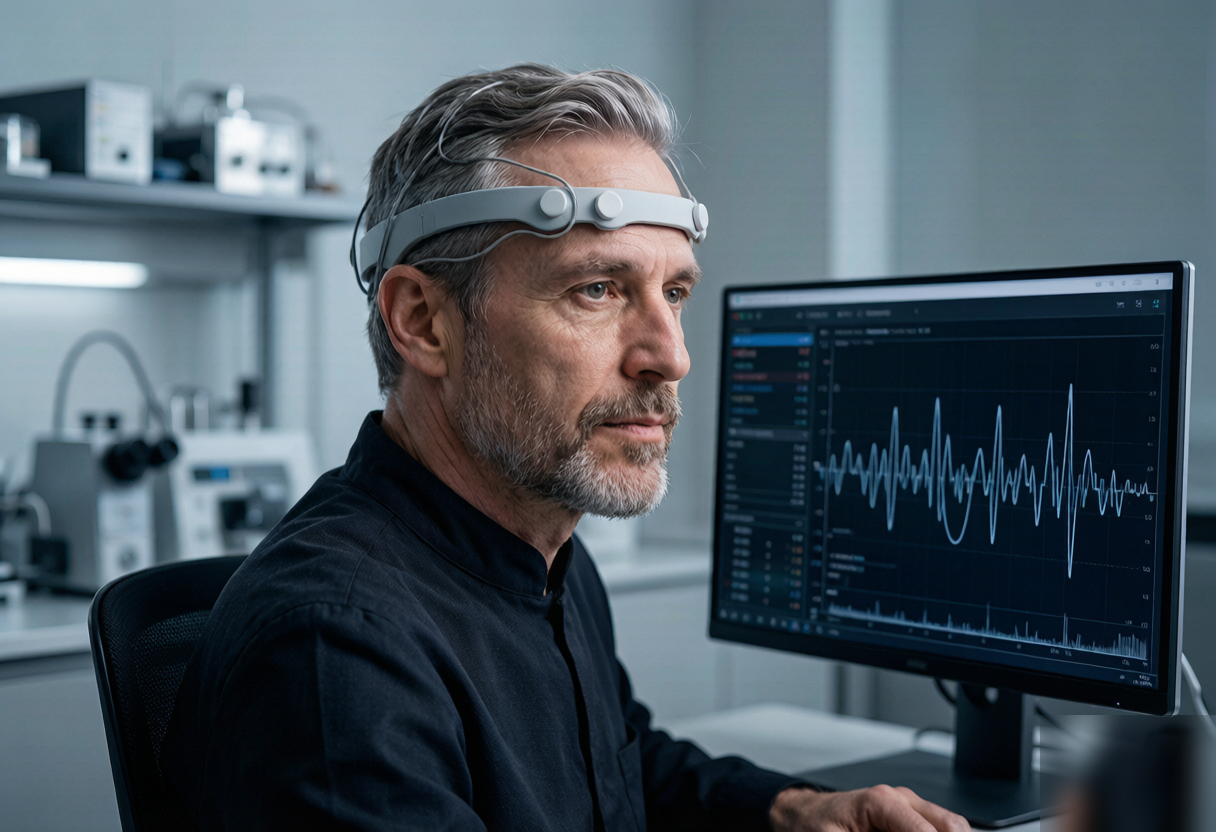
Brain-Computer Interface Value Network
Connecting human neural intent with the digital world to build a trusted, private, and inclusive neuro-economic infrastructure.
Abstract
Brain-Computer Interfaces (BCI) are moving from the laboratory into daily life, making the exchange of information between human and machine no longer depend on muscles or peripherals, but rest directly on neural activity. Once "intent" can be read, understood, and transmitted, a new question follows: how should the value carried by that intent be fairly measured, circulated, and safeguarded in the digital world?
OPSL proposes a decentralized value network for the brain-computer interface era. Rather than centering on a single server or company, it is maintained jointly by an open protocol and distributed nodes, forming a collaborative, measurable loop for providing, computing, and consuming neural data. This whitepaper sets out its design philosophy, technical composition, token utility, governance model, and security principles.
Chapter 1 · Introduction & Vision
1.1 The Historical Context
Over the past decades, computing paradigms have shifted many times—from mainframes to personal computers, from desktops to mobile, from mobile to the Internet of Everything. Each shift reduced the friction between people and information. The next shift represented by brain-computer interfaces tries to remove the final layer of friction: turning "thinking" directly into "doing".
1.2 The Core Question
Once intent becomes a transmissible signal, a value network must answer three questions: who owns the intent? How can we collaborate without leaking private information? And how can contribution be fairly measured? OPSL takes these three questions as its starting point.
1.3 Vision
- People-first: technology serves human autonomy and dignity.
- Data is private: sovereignty over neural data always rests with the user.
- Open by design: protocols, tools, and ecosystem are open to the world.
- Inclusive access: lower the barrier to entry and reach broader communities.
Chapter 2 · Neural Technology Foundations
OPSL's capabilities rest on non-invasive brain-computer interfaces. Compared with surgically invasive approaches, the non-invasive path offers clear advantages in safety and accessibility, and fits the "inclusive" vision better.
2.1 Neural Signal Capture
Sensor arrays placed on the scalp or close to the cortex capture electrophysiological activity. Capture is designed to be comfortable, continuous, and low-burden, suitable for daily use.
2.2 Intent Decoding
Neural-representation models map continuous neural activity into structured intent semantics. As data accumulates and models iterate, decoding accuracy and coverage keep improving, creating a "the more you use it, the better it understands you" synergy.
2.3 Neural Feedback
The network supports a bidirectional loop: responses from the digital world are returned to the user in perceptible form, helping them regulate state, reinforce training, or complete interactions—forming a positive cycle of co-evolution between human and system.
Chapter 3 · Network Architecture
OPSL adopts a modular, layered architecture that decouples application, protocol, neural data, and security, so each layer evolves independently yet works in concert.
3.1 Application Layer
End-user services for healthcare, education, entertainment, and research turn neural intent into usable product experiences—the surface where the value network meets the user.
3.2 Protocol Layer
Open rules defining value transfer, intent attestation, and collaborative confirmation. All nodes coordinate under one protocol, ensuring the network runs without ambiguity.
3.3 Neural Data Layer
Encrypted storage, authorized sharing, and trusted computation of neural signals. Data sovereignty rests with the user; any external use follows minimization and revocability.
3.4 Security & Privacy Layer
End-to-end encryption, zero-knowledge verification, and access control woven throughout, guarding every bit of neural information—the root of the network's trustworthiness.
Chapter 4 · Token Utility & Incentives
OPSL is the network's native utility token, playing a role like a "neural impulse"—driving collaboration, incentivizing contribution, and carrying governance. Its utility appears in these dimensions:
4.1 Value Transfer
Settles neural-data and compute contributions between apps and services, so collaboration is fairly measured and rewarded, avoiding value being captured by a single intermediary.
4.2 Contribution Incentives
Rewards participants who provide compute, data labeling, model training, and node operations, guiding resources steadily to where the network needs them most.
4.3 Governance Voting
Holders vote on protocol parameters, ecosystem funds, and key proposals, ensuring the network's evolution is decided by the community.
4.4 Staking & Security
Staking lets participants join network validation and security; stakers take on corresponding responsibility and earn network returns, aligning security with incentives.
Chapter 5 · Use Cases
OPSL's value ultimately shows in the scenarios it enables. The directions below are actively explored today:
5.1 Medical Rehabilitation
Assists motor-function recovery, neurological-disease monitoring, and accessible interaction, so technology serves health and dignity.
5.2 Education & Cognition
Uses neural feedback to refine focus training and learning, giving personalized education an objective signal basis.
5.3 Immersive Entertainment
Drives avatars and scenes directly with intent, reshaping interaction in games, social, and the metaverse.
5.4 Digital Identity
Builds self-sovereign decentralized identity from neural traits—people "prove themselves" rather than being "granted identity by a platform".
5.5 Research Collaboration
Aggregates multi-center neural data while preserving privacy, accelerating collective breakthroughs in brain science and human–machine interaction.
Chapter 6 · Governance & Ecosystem
6.1 Community Governance
OPSL rejects any centralized control. Protocol-parameter changes, ecosystem-fund allocation, and major upgrade paths are all decided jointly by token holders through public proposals and votes. Governance weight evolves dynamically with contribution and staking, avoiding entrenched power.
6.2 Ecosystem Fund
A community-managed ecosystem fund supports developers, researchers, and early scenario deployment, returning the network's value to ecosystem building.
6.3 Open Collaboration
The protocol, SDK, and reference implementations are open to the world. Third-party developers, research institutions, and service providers can build on a unified standard, forming a collaborative economy around neural value.
Chapter 7 · Security & Privacy
Neural data is biometric information more private than a fingerprint. OPSL treats privacy as a first principle of architecture, not an afterthought.
7.1 End-to-End Encryption
Neural data is encrypted at the point of capture; only the user holds the keys. Even in transit and storage, raw content cannot be read by unauthorized parties.
7.2 Local Desensitization
Sensitive information is desensitized and features extracted locally, minimizing data leaving the device and reducing leakage risk at the source.
7.3 Zero-Knowledge Verification
Through zero-knowledge proofs, parties can complete collaborative confirmation on the basis of "proving without exposing," balancing usability and privacy.
7.4 Access Control & Revocability
Any use of neural data requires the user's explicit authorization, and that authorization can be revoked at any time—keeping the user in control.
Chapter 8 · Development & Outlook
OPSL advances steadily, reversibly, and in a community-driven way. The phases below are defined by target capabilities, emphasizing maturity progression over a fixed schedule.
Phase 1 · Launch
Establish the core spec of the neural value protocol, open-source the base SDK and reference implementation, and build an early researcher and developer community.
Phase 2 · Build
Launch the decentralized value-settlement network, onboard the first non-invasive neural devices, and establish community governance and an ecosystem-fund mechanism.
Phase 3 · Expand
Extend into verticals like healthcare and education, introduce privacy computing and zero-knowledge verification, and attract third-party services with cross-institution collaboration.
Phase 4 · Endure
Achieve full community autonomy, form a cross-ecosystem neural-value standard, and keep evolving protocol and security.
Chapter 9 · Glossary
- Brain-Computer Interface (BCI): a system that establishes a direct communication and control pathway between the brain and external devices.
- Intent Decoding: the process of mapping neural activity into structured semantics or commands.
- Neural Feedback: a mechanism that returns system responses to the user to form a bidirectional loop.
- Zero-Knowledge Verification: a method of proving a proposition true without exposing the underlying information.
- Decentralized Value Network: a value-collaboration infrastructure maintained by distributed nodes, with no single controlling party.
- Community Governance: a mechanism by which token holders decide the network's evolution through public proposals and votes.